It is half past nine on a busy morning at a guest house in Bhurban. A family at the counter wants to know if their room is ready. The answer exists — housekeeping finished the room ten minutes ago — but it lives three floors up, in the head of a supervisor nobody can reach. So a bellboy is dispatched up the stairs, the family waits, and a five-second question consumes eight minutes of everyone’s patience.
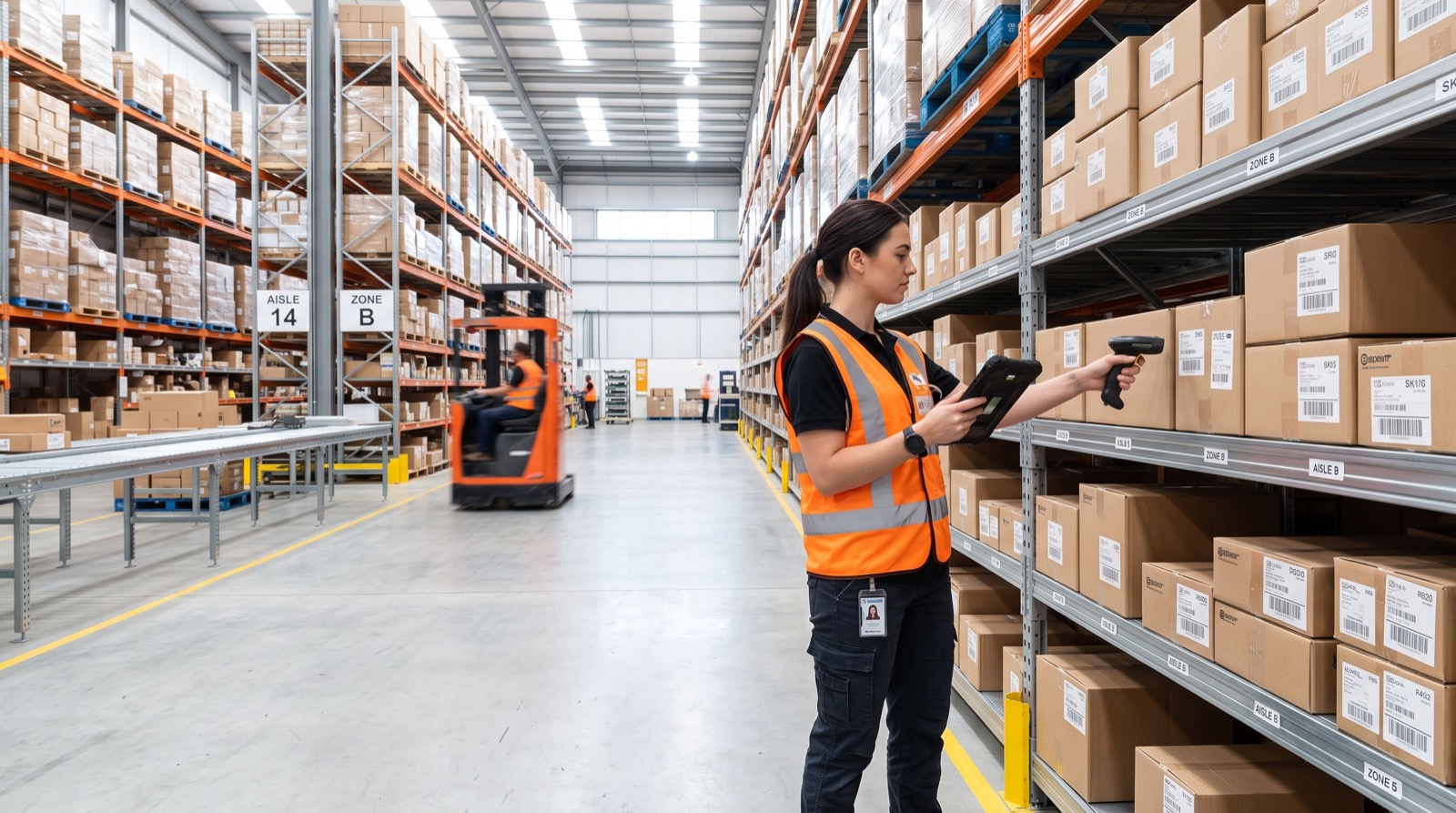
Multiply that little scene across check-outs, kitchen queries, maintenance requests, and delivery arrivals, and you have the hidden tax that mobile staff pay in almost every hospitality and industrial business in Pakistan. Desk phones solved communication for people who sit. Wi-Fi handsets are now solving it for the far larger group of people who don’t.
The Mobility Gap Nobody Budgets For
When owners plan a property’s communication system, they instinctively count fixed points: front desk, kitchen, manager’s office, guard cabin. What no line item captures is the workforce in motion — housekeepers, floor supervisors, storekeepers, electricians — who between them make hundreds of micro-decisions daily and have no direct channel to the people asking for them. Personal mobiles seem like the obvious patch, but they bring their own troubles: staff paying for work calls, guests’ queries mixed in with private chats, no way to route or record anything, and numbers that leave when an employee resigns.
A Wi-Fi handset closes this gap differently. It is a full extension on the same PBX as every desk phone in the building, but it rides on the wireless network you already run for guests and CCTV. The housekeeping supervisor becomes extension 204: reachable from the front desk in two digits, able to call the laundry, and included in the same call logs as everyone else.
The economics reinforce the logic. A Wi-Fi extension costs nothing per call, whether the conversation is between the basement and the roof or between the property and a supplier across town. Compare that with a dozen staff mobiles topped up every month, and the handsets typically pay for themselves within the first year — before counting a single saved guest complaint.
Why Not Just Use Walkie-Talkies?
Two-way radios remain popular on Pakistani sites, and for open-air security patrols they still make sense. Inside a hotel or warehouse, their weaknesses show quickly. Radios broadcast to everyone on the channel, so the lobby hears kitchen chatter. They cannot receive a transferred guest call, cannot dial an outside supplier, and cannot leave a voicemail. Cordless DECT systems address some of this, but they require their own dedicated base stations and repeaters — an entire parallel radio infrastructure — where a Wi-Fi handset simply borrows the access points already mounted in the corridors.
Purpose-built models make the case concrete. The Fanvil W610W, for example, is a portable Wi-Fi phone that registers to the PBX like any desk unit, roams between access points as staff walk the floors, and slips into an apron or overall pocket. To the phone system it is just another extension; to the supervisor carrying it, it is the end of stairway sprints.
The Front Desk Still Anchors Everything
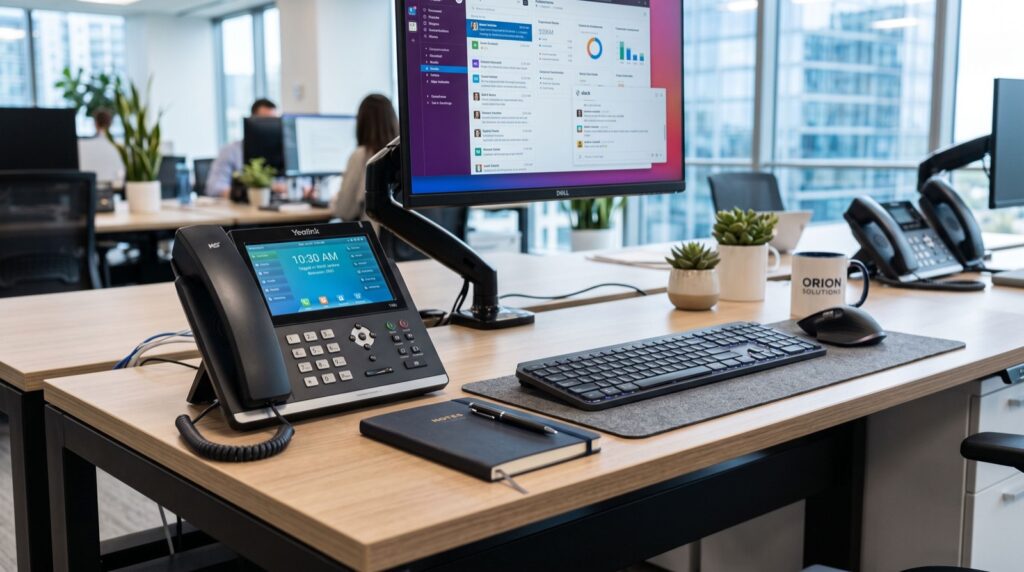
None of this makes the wired phone obsolete — quite the opposite. Mobility works only when there is a strong fixed anchor receiving outside calls, distributing them, and monitoring who is reachable. A reception counter handling bookings, guest complaints, and supplier calls deserves a serious wired device: something like the Fanvil V61G Prime Business Phone gives the duty officer a proper colour display, crisp wideband audio for phone bookings, and the line capacity to hold a guest while summoning a roaming supervisor by extension. The pattern that works is wired at the anchor points, wireless in every pocket that moves.
Audit Your Wireless Before You Order Handsets
The one honest caveat with Wi-Fi telephony is that it inherits the quality of your wireless network. A network that comfortably serves guests scrolling social media can still stumble on voice, because a walking caller changes access points mid-sentence. Before purchasing handsets, walk the property with a signal-testing app and check the following:
- Coverage in the unglamorous places — stairwells, basements, laundry rooms, and lift lobbies where staff actually walk.
- Roaming behaviour between access points, since voice drops during slow handovers even when signal bars look full.
- A separate SSID or VLAN for staff voice, kept away from the guest network for both quality and security.
- Access point capacity at peak hours, when a wedding function can flood the airwaves with two hundred guest devices.
Most properties discover they need only two or three additional access points to become voice-ready — a modest spend compared with cabling new wall points into a finished building.
What the PBX Adds Once Everyone Is Connected
Once fixed and roaming staff share one system, features that sounded like luxuries start doing daily work. Automated wake-up calls run themselves instead of depending on a night clerk’s memory. A housekeeper can punch a code from the room phone to mark a room clean, updating the front desk instantly. Calls from unhappy guests can be recorded for training. In a warehouse, the storekeeper’s handset can join a ring group so supplier calls find whoever is on shift. Each feature is small on its own; stacked together across a full shift, they quietly change how the whole building runs.
A Modest Investment Against a Large Asset
For hoteliers and warehouse owners, the property itself is usually the family’s biggest holding, and decisions about it are made carefully — the same way careful investors weighing property markets lean on reliable local experts before committing capital. Set against the value of the building, a handful of Wi-Fi handsets and an access point or two is pocket change. Yet it is precisely this kind of small operational upgrade that guests mention in reviews and that tenants notice at renewal time, because it removes the delays people actually feel.
The Bhurban guest house from the opening scene fixed its problem with four pocket handsets and one afternoon of configuration. The family at the counter now gets an answer in the time it takes to dial three digits. Nothing about the building changed — only the distance between a question and the person who could answer it, which turned out to be the only distance that mattered.