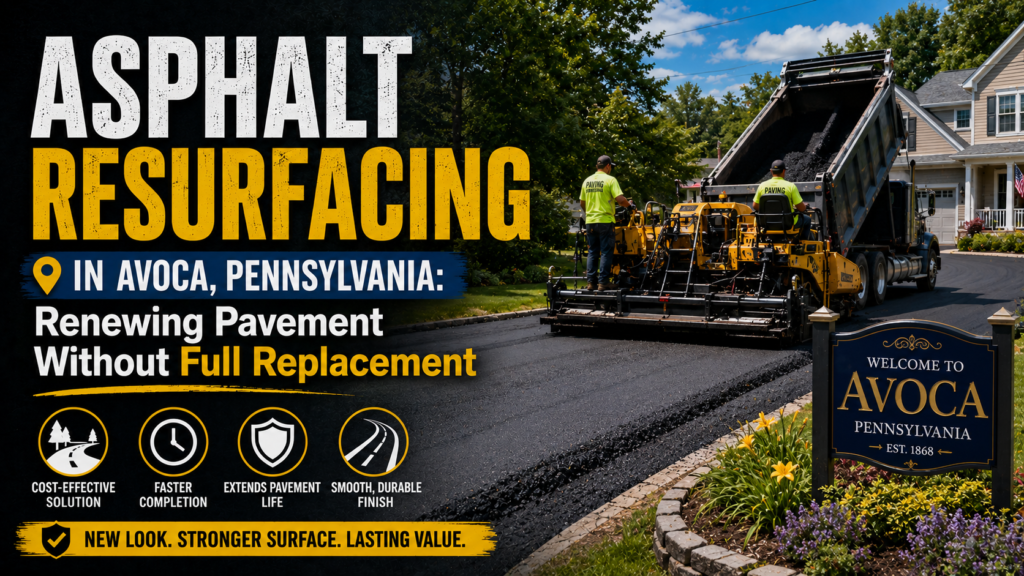
Asphalt surfaces in Avoca, Pennsylvania endure some of the most demanding conditions of any paving environment on the East Coast. Northeastern Pennsylvania’s freeze-thaw cycles, seasonal precipitation, and clay-influenced soils all work continuously to age and degrade pavement. When a driveway, parking lot, or access road reaches the point where its surface is worn, oxidized, or moderately cracked but its underlying base remains structurally sound Asphalt Resurfacing Avoca offers a cost-effective path to renewal that avoids the expense and disruption of full replacement.
What Is Asphalt Resurfacing?
Asphalt resurfacing, also called an asphalt overlay, is the process of applying a new layer of hot mix asphalt over an existing pavement surface. Rather than removing the old pavement entirely, resurfacing preserves the existing base and simply renews the wearing surface the layer that experiences the daily stress of vehicle traffic, UV exposure, water infiltration, and freeze-thaw movement.
When performed on a structurally sound base, resurfacing effectively resets the service life of the pavement. A well-executed overlay on a properly prepared existing surface can add 8 to 15 years of service life, at a fraction of the cost of full-depth replacement.
The Step-by-Step Resurfacing Process in Avoca
Proper asphalt resurfacing in Avoca is not simply applying new asphalt on top of old. The process involves careful preparation that determines whether the overlay bonds successfully and performs as intended:
- Surface assessment: The existing pavement is thoroughly inspected to confirm the base is structurally sound. Areas with base failure, extensive alligator cracking, or significant subsidence are identified and addressed before resurfacing if these areas are not repaired, the overlay will fail over them in the same pattern as the existing damage.
- Crack repair and patching: Existing surface cracks and potholes are cleaned, prepared, and filled. On surfaces with extensive cracking, this step may involve saw-cutting and removing damaged sections and replacing them with new base-course and surface-course material before the overlay is applied.
- Milling (where applicable): In areas where curb height, drain inlets, or garage door apron height would be compromised by adding material on top of the existing surface, the old asphalt is milled down by 1.5 to 2 inches before the overlay is applied. Milling creates a more mechanical bond surface and maintains critical elevation relationships.
- Surface cleaning: The existing asphalt is thoroughly blown and swept clean of all loose debris, sand, and vegetation.
- Tack coat application: A thin asphalt emulsion is sprayed uniformly over the prepared surface to promote adhesion between the existing pavement and the new overlay. Proper tack coat application is critical too little results in delamination, too much creates a slippery layer that prevents proper bonding.
- Overlay installation: Hot mix asphalt is spread by a mechanical paver to a uniform depth, typically 1.5 to 2 inches for residential and light commercial surfaces. The paver maintains consistent thickness and smoothness across the entire area.
- Compaction: Steel rollers compact the fresh overlay to achieve design density. Compaction must be performed while the asphalt is still at temperature typically above 175 degrees Fahrenheit. Insufficient compaction produces a loose, open surface vulnerable to early deterioration.
When Resurfacing Is the Right Choice in Avoca
Resurfacing is the appropriate treatment when:
- The existing base is structurally sound no evidence of base failure, significant subsidence, or extensive alligator cracking that extends into the base layer.
- The surface has oxidized, cracked moderately, or lost its functional texture, but has not deteriorated to a point where structural issues predominate.
- The pavement is between 10 and 20 years old with a maintenance history that has preserved the base condition.
- Drainage patterns are acceptable and do not need to be modified resurfacing works with the existing grade rather than changing it.
Resurfacing is not appropriate when the base has been compromised by water infiltration or repeated freeze-thaw damage, when alligator cracking covers large sections of the surface (indicating base failure), or when the existing pavement has been overlaid multiple times and lacks adequate sub-base depth for another layer.
Pennsylvania’s Climate and the Timing of Resurfacing
Asphalt resurfacing in Avoca must be timed appropriately to the region’s seasonal conditions. Hot mix asphalt requires ambient temperatures above approximately 50 degrees Fahrenheit for proper laying and compaction below this threshold, the material cools too quickly, compaction becomes inadequate, and the overlay’s long-term performance is compromised.
In Northeastern Pennsylvania, this limits the practical resurfacing season to late April through October, with the most favorable conditions in late spring and early fall when temperatures are moderate and precipitation is less disruptive. Projects scheduled in this window benefit from ideal asphalt temperature management conditions and the opportunity for any sealing or finishing work to cure fully before the first winter freeze.
Resurfacing vs. Sealcoating vs. Full Replacement: Choosing the Right Approach
These three treatments address different stages of pavement deterioration:
- Sealcoating: A protective surface treatment that extends the life of sound pavement by blocking UV oxidation and minor moisture infiltration. Appropriate for surfaces in good condition that need protection, not repair.
- Resurfacing (overlay): Renews a deteriorated wearing surface when the base remains sound. Restores function and adds significant service life at moderate cost.
- Full-depth replacement: The only appropriate response when base failure has occurred. Involves removing all existing material, addressing base conditions, and installing an entirely new pavement structure.
Correctly diagnosing which treatment is appropriate requires an honest assessment of the existing pavement’s structural condition. Applying an overlay over a failed base is an expensive mistake the new surface will fail quickly in the same locations as the existing damage.
Conclusion
Asphalt resurfacing in Avoca is one of the most cost-effective infrastructure investments available to residential and commercial property owners. It renews aging pavement, extends service life, improves safety and appearance, and protects the existing base investment all at a fraction of full replacement cost. Understanding the process, knowing when it is appropriate, and ensuring it is executed correctly are the keys to getting the full value from resurfacing in Northeastern Pennsylvania’s demanding climate.